
Suum Library
Success behind Ieoh Ming Pei
It All Begins Here
(1917-1948)
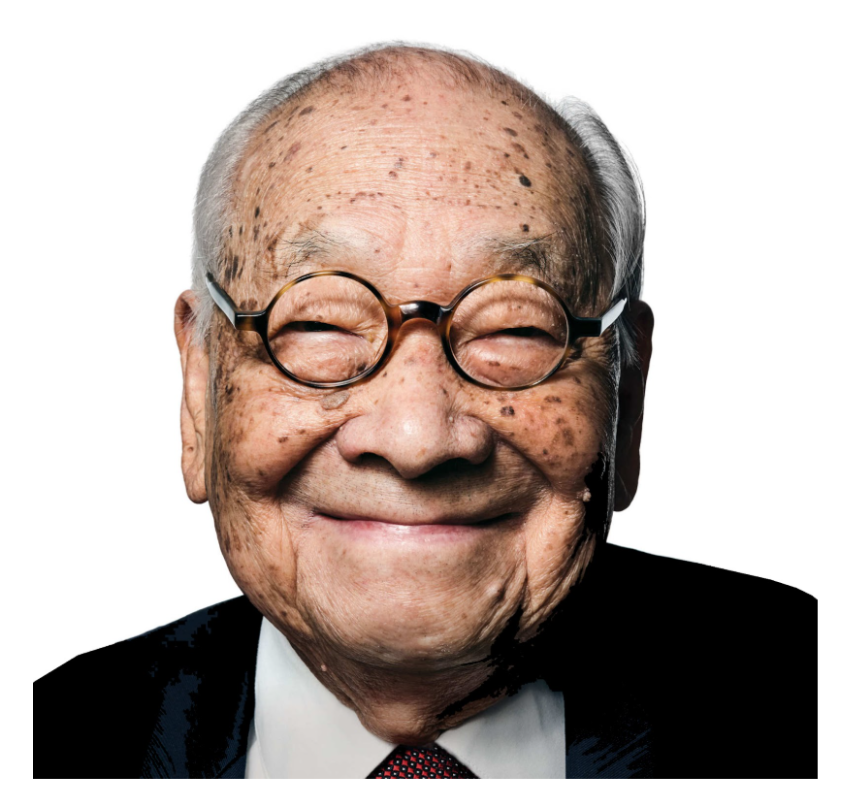
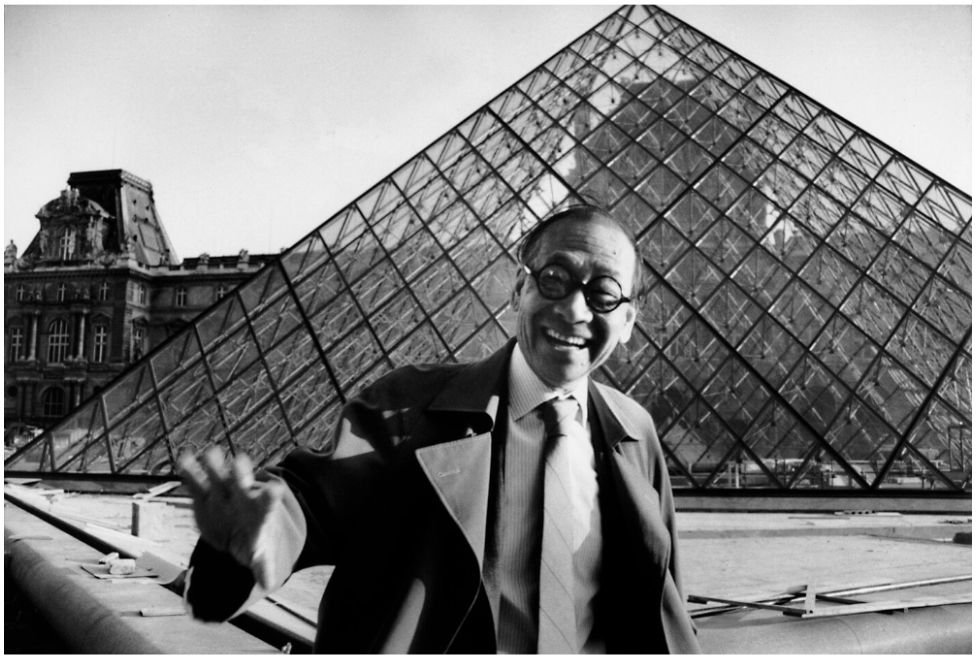
Ieoh Ming Pei was a Chinese-American architect born in Guangzhou, China, on April 26, 1917. Pei was most famously known for his projects, such as the Louvre glass pyramid, the East Building of the National Gallery of Art in Washington, D.C., and the John F. Kennedy Presidential Library and Museum. Growing up, he and his family moved to Hong Kong and then to Shanghai, all before the age of 10. Then, at the age of 18, Pei moved to the United States and initially enrolled at the University of Pennsylvania before transferring to the Massachusetts Institute of Technology, graduating in 1939 with a Bachelor of Architecture. In 1938, while visiting a friend in New York City, he met Eileen Loo, whom he married and had four children with. Although Pei and Loo planned to return to China after their marriage, they were unable to do so due to the outbreak of World War II. Thus, Pei carried out several architectural contracts around the United States. From 1945 to 1948, he worked as an assistant professor at the Graduate School of Design of Harvard University, and eventually received a Master of Architecture from that school.
(1948-2019)
In 1948, Pei joined the firm of Webb & Knapp as a director of the architectural division. He also worked closely with the real estate developer William Zeckendorf, head of the firm, and created urban projects, such as the Mile High Center in Denver, the Hyde Park Redevelopment in Chicago, and the Place Ville-Marie in Montreal. Only in 1954 did Pei become a U.S. citizen, for which he considered himself “very, very lucky” because “in those days, to be an American citizen was very, very difficult.” In 1955, he founded his own architectural firm, I.M. Pei & Associates. The firm designed architecture ranging from the Luce Memorial Chapel in Taiwan to the Emerson Museum of Art, Syracuse, New York. In 1960, Pei was selected to design the multi-airline terminal at John F. Kennedy International Airport, New York City. Besides designing public buildings, Pei was also involved in urban renewal planning, such as the Javits Convention Center in 1986. In 1989, he was chosen by Francois Mitterrand, a former president of France, to renovate the Louvre Museum, which is known as the Grand Louvre Project. At the same time, Pei completed the Bank of China Tower in Hong Kong, designed to resemble bamboo. Although he retired in 1999, he still pursued architectural projects until he died in 2019.
Interview with Micheline (Micky) Leroy Monfe Satkowski
It All Begins Here
I was born in France as the third child after two boys. I lived in France, in a small rural town, until I was twenty years old. During my time here, I experienced WWII where I remembered coming home from school and witnessing bombings and destructions from the German forces. My older brothers at the time were to be drafted and one of them evaded the German forces by going into a safe house for two years. My other brother did in fact join and was able to survive the war with little to no injuries. At home, I was in desperate need for a surgery while the war was approaching closer and closer to my rural town. My parents made the decision for me get the surgery, and although it was a risky move, it saved my life. When I found out the war was over through newspapers and through other people, it was the happiest day of my life. Liberation was something that felt so far from me, yet it finally happened. After the war, I married an American soldier who was at France at the time. I learned how to speak English through him and came to New Jersey to marry him. For the first five years of my life in America, it was such a different environment and I learned the most important life lesson here, to be able to adapt to different places. I had the help of my mother-in-law and I worked as a teacher here, and through these actions, I became comfortable with my life here.
A part of me wanted to survive in America to keep the memory of my mother alive. She was an orphan in the 1800s, and was brought on the Orphan Train from Paris to different parts of France where she would later be chosen by a young couple. They were thankfully nice to her, but she struggled to ever gain an education and had to live through WWI and WWII while taking care of me.
From the Jungle to Civilian Life: An Interview with John Uzzi
It All Begins Here
Interview Transcript
Date transcribed: 6/24/2024
INTRODUCTION
Interviewer 1:38
Hello, good morning. Good morning. How are you?
John Uzzi 1:43
Well, thank you. How about yourselves?
Interviewer 1:45
Good. Yeah. Nice to see you.
Interviewer 1:47
Nice to see you, too. My name is Gianna. And this is...
Interviewer 1:50
I'm Renee
Interviewer 1:51:
And this is Yebin.
Interviewer 1:53
And we just wanted to ask you like a couple of questions about your service and your deployment and how it what it felt like adjusting to civilian life and other questions like that. Okay.
EARLY DAYS IN THE SERVICE
Interviewer 2:12
So shall we start by? So when were you drafted? Or if you enlisted, when did you enlist?
John Uzzi 2:19
That's a little bit of a complicated question that I was in Vietnam era veteran. In the late 60s, it was 1969. And the time then the country was in a lot of turmoil over the war. And in fact, a lot of the atmosphere is very similar to today, on college campuses, with protests against and the concerns about violence and free speech, and all very much the same, just over different content. So it was quite controversial. The war, I was in, was called a college deferment. Back then, in the 60s, or 18 year old males, only males had to register for the Selective Service. And so I did that. But since I was in college, I got a deferment. I didn't have to go into the service. However, one week before my graduation, I got drafted. I got a draft notice. So I went to my recruiter, and I asked, I said, you know, you're not going to draft me, you know, into the infantry. And he said, Well, we can do a deal. You go to Officer Candidate School, which means you spend an extra year in the service as an officer. But you don't go overseas, you stay in the US. So I thought that was a good idea. I went into the service, then under that plan, when I was inducted that way, but I found out while we were serving that the army wasn't honoring those deals. And so what they were saying is, well, we'll make you an officer, but then you go to Vietnam as an officer for a year and then come back. So I didn't want to do the extra year. So I talked to him. So I was sort of a hybrid of a drafty enlisted, and I ended up being more drafty than an enlisted man.
Interviewer 4:10
That's very interesting! How did you tell your family and friends that this was going on like that you were drafted and listed?
John Uzzi 4:21
Yeah well, it was a surprise when it happened. The fact that it did happen wasn't a surprise, because back in those days, the war was full swing, and we were populating it with new soldiers all the time. So it wasn't surprising that I got drafted the winner of that draft, it was a surprise. So it wasn't, I mean, it was difficult, because who wants to tell that but you get an official letter from the government and it says you have to report on such and such a day. And so I went to my parents and I said, this is what I got. So here's the next steps there.
Interviewer 4:55
As you saw the letter what did you feel and what did you expect for the next couple of years when you're deployed?
John Uzzi 5:04
Yeah, good question. I didn't have any expectations is all we knew from from TV news, which is how we got our news back then no social media, no Facebook. The war was broadcasted as a bad terrible thing was going on. And wars are bad, terrible things. It's by definition. And so I didn't. So I was anxious. I had a lot of anxiety, I think. But that's really the only emotion I had going in.
Interviewer 5:41
So after you ended up serving, how did your expectations or perceptions of the war change?
John Uzzi 5:50
Well, two things, I guess, going into the war, I actually considered not going back then there was a lot of a lot of people were leaving the US and go into Canada to avoid drafting and avoid going into the war. I thought about that I was married at the time. So my wife and I discussed it. And I frankly decided that I wouldn't know whether my decision was based on fear, or a true objection to the war, unless I went. So I chose to go. So one of the things that happened is my conviction about it being a bad thing.
Or wars, was that was confirmed in my mind.
What was the surprise was the professionalism of the men I served with. We were out in the field, I was out in the field for about seven months as an infantryman. And I was surprised about how seriously, people took their jobs. And of course, it's a life and death situation. So people were very serious about what they were doing.
DEPLOYMENT
Interviewer 6:57
So when you got deployed, where did you serve during the war?
John Uzzi 7:05
Yeah, I served in the central highlands of Vietnam.
John Uzzi 7:05
And that stuck toe and play cool. Have a map. It's kind of like two thirds of the way south of the country. Lots of people in Vietnam served in the rice paddies. So I never saw a rice paddy. So my experience was very different. We were in deep jungle. We had to cut paths and create places to walk, which was the main means of travel that and helicopters.
So it was the central highlands, and we were we were close to the Cambodian border.
Not real close, but close enough that I I know I was in Cambodia. Literally on the day our president said we had no troops in Cambodia. I was physically there.
Interviewer 7:48
Okay, did you see many like civilians during your time serving? Or were you like more remote?
John Uzzi 7:57
Yeah, I did not see many civilians. We were very remote. But there were villages. And I was actually, we were just up at our lake house. And we had a firepit going the other day, and it was saying we'll get over the mountain yards, which were a tribe that lived in that area is to make charcoal. And so there were little villages. And in fact, the first 40 days of my tour in Vietnam, there was the monsoon. So we couldn't get resupplied. Helicopters couldn't fly. So we actually went to those villages and got rice, traded them for rice, and then we pick peppers and things and that's how we.
Interviewer 8:36
So while you were deployed, did you stay in touch with any of your friends and family? And how did you?
John Uzzi 8:44
Yeah, but the way to stay in touch was letters. There was, you know, again, no phone. So my wife literally wrote to me every day, I got those letters in batches. So like when it rained for four days, I didn't get an email and then I got 50 letters all at once. And we were able to write back in the mail was very important in the army. resupply was ammunition first food second and then mail. You know, they wanted us to get packages and we could get some things like that. But the only time I could telephone was back in the US after I served in Vietnam. And I came mills in Fort Lewis, Washington then I called home and said I'm on my way home.
Interviewer 9:31
What's one of your like, most memorable stories?
John Uzzi 9:38
Did I not have the camera on? I'm sorry. There are two things that I thought I'd share with you about that. As I said, I was out in the field. My unit walk point I was a sergeant so I was in charge of anywhere between 10 and 30. Guys at any given time, we worked in four man teams and one of our missions was to walk point, that's the first people up front. And one day we were doing that I was walking with about a company wide deployment. So that's about 200 people, probably closer to 150.
We would usually stop at dusk, but this time we were working late. Yes, we had to move faster.
At some point, it got very dark. So I radioed the company commander, "It's getting real dark, we need to stop soon. It's too dangerous." He said, "Okay, find us a place." We were in the jungle, so I found a field big enough for 200 guys to camp in. It was dark by then. We dug a circle, about six to eight inches deep, put an air mattress in and laid in it. We woke up the next morning, and it was a farmer's field. We'd destroyed their food crop, which they lived on. We destroyed those people's property. Accidentally. I don't know what we could have done differently.
There was another incident. The most significant experience I had, without doubt. It's a little harsh story, I hope it doesn't bother you. I had malaria a couple of times while I was out there. It was the highest incidence of malaria in the world. I was coming back from the hospital after having recovered and was supposed to join my unit by helicopter. They told me the helicopter wasn't flying; I'd have to wait till the next day. "That's okay," I said. But the next day, they said, "No helicopters have been flying." I asked what was going on, and they said my unit was in contact. They were in a battle with the enemy. So, I was stuck at the base camp.
The next day, they sent me down to graves registration, who dealt with the people killed in action. I had to go and identify two of the guys I worked with, two people on my team, killed in this firefight. It's an experience I recall every time I hear the Star Spangled Banner, close my eyes, and think about Megan and Palmer because that was their names. That night, it was a drizzly, rainy, muddy. I had to climb this hill to get to this tent, and on the ground and the tent where I chose, there were plastic wrinkles. There were the bodies, and I was able to identify two, which was an experience that I will obviously never forget.
Interviewer 13:30
I didn't mean to take you down, but it's okay. How did you feel about interacting when you saw enemy soldiers? How did it make it? And was there anything you did to make it easier?
John Uzzi 13:48
Oh, interesting question. Well, interestingly, I was out in the field for seven months. We walked, looking for called-in artillery. I have a disability because of hearing loss as a result of the artillery around me all the time.
I only saw enemy soldiers once. We saw uniformed NVA troops. Remember, the Vietnam War was a civil war, North versus South. So they were revolutionary kinds of people. There was a formal army from the North Vietnamese. This was a formal army unit in a no-fire zone. So we couldn't fire, and I know I was in contact with the enemy, but we couldn't see one another because we were in the jungle. So you really couldn't see anyone. By the time I was out in the field, there was sort of an undeclared truce, though that's too strong a word, but we'll avoid you if you avoid us, and let's not shoot at one another. For U.S. soldiers, we just had to stay a year and survive, then we were going home. So that was everybody's goal. Nobody was out looking for battles, at least where I was during that period of time. We were just trying to stay safe and get home.
Interviewer 15:14
Was there anything that you missed, especially from back home?
John Uzzi 15:22
Well, the obvious things, family, the beginnings of a career. I had gotten a job that I couldn't start, couldn't take because I drifted out of food, we should eat very well. The Army provided us canned food, K rations that were not particularly good. We also had those foods that you can put in boiling water and make a meal. We were the first people experimented on with those products, so we got some of those, and they were a little better, a little better. But those were the things we were very focused on, at least with my unit. We were very focused on what we were doing because it was pretty dangerous, and we were very good at what we did. So that was important to us.
TRANSITIONING TO CIVILIAN LIFE
Interviewer 16:12
Can you describe how you felt coming back home from the camp?
John Uzzi 16:33
Yeah, coming back home was an intriguing thing. The war was very, very unpopular, and the individual soldier was blamed for it. So we as individuals were blamed for a war that people didn't like. And I think if society has changed in any way in the past 60 years, one very positive change is that this has changed. Whatever you think about the wars that we're engaged in now, people don't blame the individual soldier. They try to respect the individual soldier. That was not the case when we came back. We slunk back into the U.S.
You had to process out; I processed out of Fort Lewis, Washington. And the Army takes you to the airport. That's the end, but they get you to the airport. And now you're in uniform. The first thing we all did was go find the men's room, take off our uniforms, and get rid of them. We did not want to be identified because we were vilified. So for years and years, none of us told anybody we were Vietnam vets. People would be stunned when they found out. I suffer from PTSD, and one of the symptoms is I don't, this is very unusual for me to be talking to you about this. I usually don't talk to anybody about it. Many years ago, my mother came to me and said, my children were asking her questions, and they wanted to know more about it. And I didn't talk about it. And I said, well, it's not the kind of thing you sit down at dinner and say, "Let's talk about the war." So she actually had a great idea. She said, "You should watch a movie together." And so that's what we did, and that's how we started the conversation. I typically do not read the books; I do not watch the movies. I had the pleasure to talk to some of your schoolmates in English classes, and you know, that was again very unusual for me to do that.
So coming back home was difficult. Even the veterans' organizations were not welcoming to us. Now they wonder why we don't join the VA, after the VA is great. War veterans associations, and it's because we weren't welcomed when we came home. So we found other sources of what we needed.
Interviewer 18:39
Sorry, this is a bit philosophical, but what about society made it so that people blamed the individual soldiers rather than the government?
John Uzzi 19:00
You know, I wish I had an answer to that. I think it was the only way they could express the frustration at the time. So soldiers were visible. Even taking our uniforms off, we had military haircuts. Back in the '60s, everybody wore their hair very long; even men wore their hair as long as you all have yours. And we had closely shaved haircuts, so you were easily identified. I really don't know the answer to that. I just think it's the only place you could express. It's like having trouble with a company, you call their 800 number, you end up getting angry with the customer service rep who isn't responsible for your problem; they're just trying to help you. But that's who you blame because that's who's there. So it's unfortunate.
Interviewer 19:57
Despite the difficulties, was there anything or anyone that helped you during the transition from military to civilian life?
John Uzzi 20:00
Certainly my family and my wife, in particular. She was very patient with me when I came home. I did nothing for six months, just sat on the end of the couch reading New York Magazine one day after another.
Soldiers were visible, even taking our uniforms off, we had military haircuts. Back in the '60s, everybody wore their hair very long; even men wore their hair as long as you all have yours. We had closely shaved haircuts, so you were easily identified. I really don't know the answer to that. I just think it's the only place you could express. It's like having trouble with a company, you call their 800 number, you end up getting angry with the customer service rep who isn't the person responsible for your problem; they're just trying to help you. But that's who you blame because that's who's there. So it's unfortunate.
Interviewer 19:57
Despite the difficulties, was there anything or anyone that helped you during the transition from military to civilian life?
John Uzzi 20:00
Certainly my family and my wife, in particular. She was very patient with me when I came home. I did nothing for six months, just sat on the end of the couch reading New York Magazine one day after another. Before going into the service, I was going to be a journalist, so I was very interested in that stuff. It turned out that I ended up being a journalist, writing for the Record newspaper, Hackensack, not for school. She was very patient with me as I struggled through a desire to do nothing. I tried to go back to graduate school, but I got disenchanted with that very quickly. Then finally, I started to look for a job, and then I got a job, and then I got acclimated into civilian life.
Interviewer 20:47
Overall, how has being a soldier changed your perspective on life?
John Uzzi 20:57
Well, there are a couple of things I've learned. I actually think being in the military is a good experience for everyone. I would argue that we should have some sort of mandatory service without the shooting, normally war. I think thousands of years of history tell us that wars don't solve any problems. But there are some things you learn about yourself. You test yourself in ways you've not been tested before; you get out of your safe cocoon. You meet people from all over with all kinds of experiences. The other two things that I think I learned were discipline. I was raised—I went to Catholic school for 16 years, including Jesuit college. So I had a history of discipline, but the Army makes you very disciplined and very focused. And then the last thing is probably a surprising one, but it relates to business. In the Army, the person on the ground makes the decisions. As a sergeant, there was a time when the commanding officer wanted me to do something. I said, "No, I'm not doing it." And we argued about it, but I ended up making the decision. He let me make the decision; he didn't like it, but he let me make the decision because I was the guy on the ground. I've applied that in business. I found that a very effective technique, giving the people doing the work the autonomy to make decisions. So that was something else I think I learned.
Interviewer 22:28
Do you have any advice for others that might be transitioning out of the military? Or hypothetical advice that you would give to people back in Vietnam who are transitioning out?
John Uzzi 22:42
I'm not sure I would, because I think my experience of transitioning out was very different back then. The differences are more like what I would advise anyone who's changing a career: do your homework, learn what you're interested in, follow what you're interested in, and have a plan. I see that with retirees; this would be something—a military experience. You go into the military, you can retire literally in 20 years. So you go in as a 20-year-old, and at 40, you're retiring. So have a plan. Know what you're going to do, have interests, be doing another job and other work interests. Lots of people retire from the military and go into law and order kinds of positions. Know what you're going to do, I think, is a key thing. And then the typical health stuff, you know, exercise and all that kind of stuff.
OTHERS
Interviewer 23:45
Over time, how has different types of media changed your views about the war or your experiences?
John Uzzi 24:00
We used to have media that you could trust that actually did report stuff. I don't think that's the case now. I don't pay attention to the media because I find it very biased, both ways. It's not like, "All these guys are right," and "Those guys are wrong." I think the media is very biased.
Interviewer 24:23
Is there anything you wish civilians understood about military service?
John Uzzi 24:28
It's probably more like what I talked about with the business stuff—the way it works, the way the Army works, what training is like. I mean, the training is terrific for what it is. I was taught how to live in the jungle and how to survive. The training was very effective. I spent seven months in the field. The last four months, I was in a back office. They learned I could type, which was the most important skill in the Army back then. So I became a clerk, an awards clerk. Even there, the preparation and training were quite effective. I don't think people realize that. I'm not sure they understand the discipline and the focus—those kinds of things, which are very good, positive skills and attributes, I believe.
Interviewer 25:46
What are some things that you specifically miss about the service? Whether that be specific memories or things you did with your peers?
John Uzzi 25:58
I miss the guys. When you're out in the field, I don't know if you've ever watched the TV show M*A*S*H*. I still think it's the best thing on TV, and it's pretty accurate. It's about the Korean War, but it's a pretty accurate rendition. You get very close to the people you work with. We went out in teams of four men at a time. You get very close to those people, and you think your lives are going to stay connected. For example, one of the two people I had to identify—he and I were very close, and I was going to be in his wedding. He was getting married in Long Beach, California. But you don't stay in touch; you come back and disperse into the community. The last thing you want to do is think back about those days. I wish I had stayed closer to the guys afterward, but I still think about them. I know their names. I remember their names. Some of them, we only knew by our radio call signs. It's like a phone number. I was Bomber One. There are people who only knew me as that—they didn't know John Uzzi, they knew Bomber One. I didn't know Bomber's name was Mark Wilson until I went to the Vietnam Veterans Memorial in Washington.
Interviewer 27:28
Do you feel special emotions or do any special things on memorable days?
John Uzzi 27:40
Yes, I do. I always recall the night I had to identify bodies. Anytime I hear the Star-Spangled Banner, it brings back memories. One of the things that used to irritate me, but doesn't as much anymore, is that Memorial Day is about honoring those who have given their lives, as Lincoln put it, "the last full measure of devotion." It's not about veterans—that's what Veterans Day is for. On Memorial Day, people should do the "thanks for your service" thing, which is very nice, but Memorial Day is about honoring the fallen. So when people say "Happy Memorial Day," it feels out of place. There's nothing happy about it, but I understand what they're trying to do. I've learned to become more patient with that.
Interviewer 28:28
Have you ever tried to reach out to anyone you met during the service?
John Uzzi 28:37
No, I haven't. My wife went and visited one of the guys in my team who got wounded and was sent back to Washington, D.C., to the hospital there—Walter Reed Hospital, I think. She visited him while I was still in Vietnam. Another guy I trained with was killed in action. His wife had a service, and my wife went to that service while I was still in Vietnam. On rare occasions, I've tried to look up information, but I'm not interested in triggering any PTSD experiences. I have a brother-in-law who does more of that. He looks up stuff and tells me about it, but I don't do that anymore.
Interviewer 29:32
To close off, did you have a favorite song that you listened to during your deployment?
John Uzzi 29:39
No, I had the opposite. We were out in the field with no radio, no social media, no Pandora, no Spotify, and no electricity. So even if you had something, there was no way to play it. When I was training in basic training at Fort Dix Washington, they woke us up every morning at 4:30 in the morning for training. When you get up, you had to do a bunch of stuff, and then you go wait on line to have breakfast and so on. But at 4:30 every morning, there was a song playing on the radio that I have come to hate: “Luck in the Sky with Diamonds” by Beatles. So I cringe everytime I hear that song.
Interviewer 29:02
Thank you so much for your time.
John Uzzi 29:05
It was my pleasure to be with you. Thank you very much.